
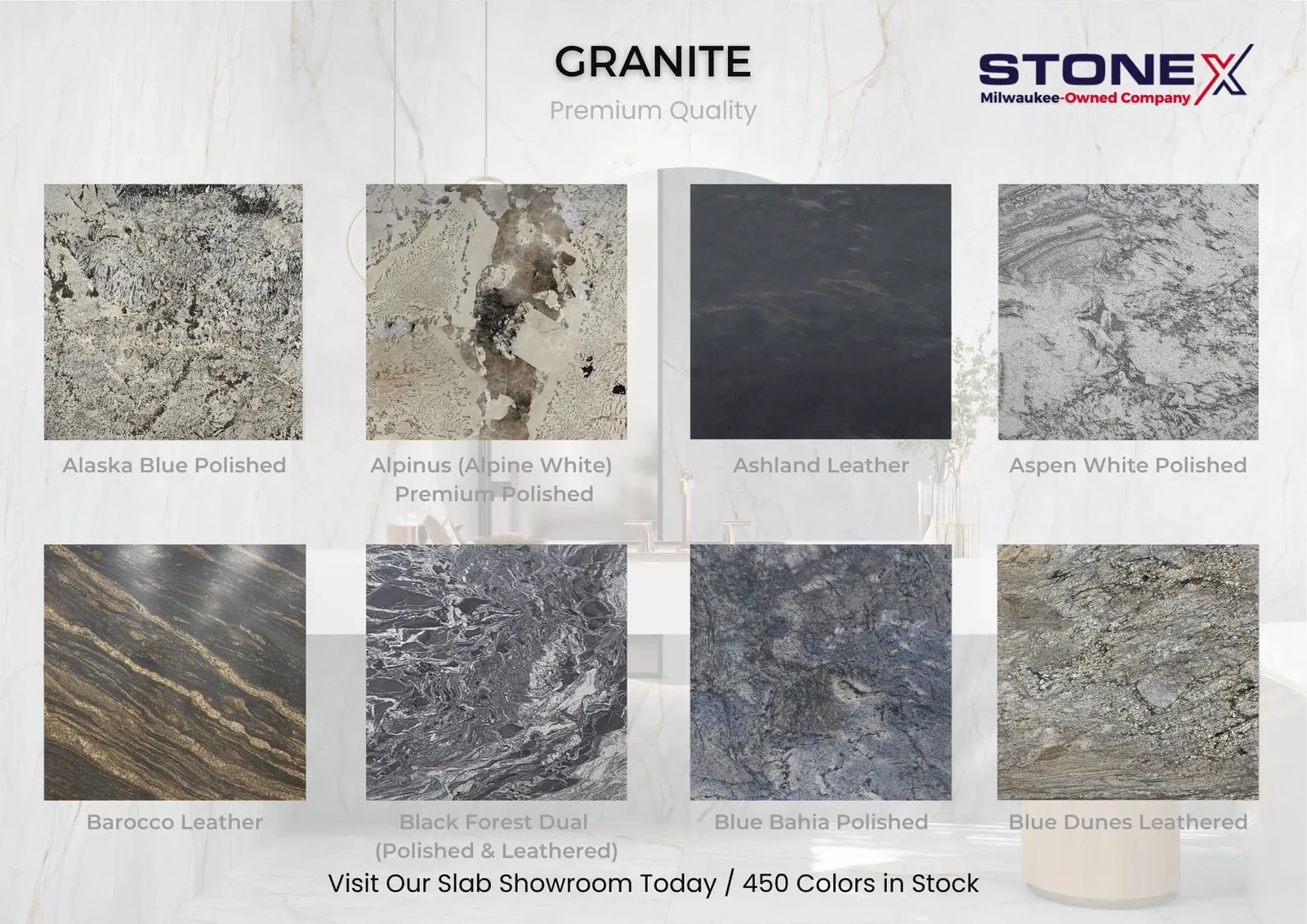
The color of your headstone granite is one of the most visible and lasting design decisions you will make. Different granite colors not only create different aesthetic effects — they also affect how well engravings, portraits, and decorative elements show. Here is a comprehensive guide to the most popular granite colors used in headstones today.
Black Granite
Best for: Laser-etched portraits, detailed artwork, modern designs
Black granite, particularly India Black (also called Absolute Black or Galaxy Black), is the most popular headstone material in the United States. Its deep, uniform color provides exceptional contrast for laser-etched portraits and inscriptions. The polished surface creates a mirror-like finish that enhances the stone's natural beauty.
Gray Granite
Best for: Traditional designs, sandblasted lettering, classic memorials
Gray granite is the traditional American cemetery stone. Barre Gray from Vermont is considered the gold standard — quarried since the 1800s and known for its consistent medium-gray color and fine grain. Georgia Gray and Bethel White are also popular choices.
Red and Pink Granite
Best for: Women's memorials, companion headstones, distinctive monuments
India Red offers a deep, rich red color; Dakota Mahogany provides a more subtle brown-red; Mountain Rose delivers a soft pink hue. These colors are especially popular for companion headstones and memorials where visual distinction is desired.
Blue and Green Granite
Best for: Unique memorials, modern designs, nature themes
Blue Pearl from Norway features iridescent blue feldspar crystals in a silver-gray matrix — it literally sparkles in sunlight. Emerald Pearl offers similar crystalline beauty in green. These premium granites create truly one-of-a-kind memorials.
How Color Affects Engraving Visibility
Darker granites show engravings as lighter marks against a dark background (high contrast). Lighter granites show engravings as darker marks against a lighter background (moderate contrast). For laser-etched portraits, black granite provides the highest fidelity because the laser creates precise gray-scale imagery against the deep background.
Sources: USGS Mineral Resources Program, Geological Society of America, Natural Stone Institute