
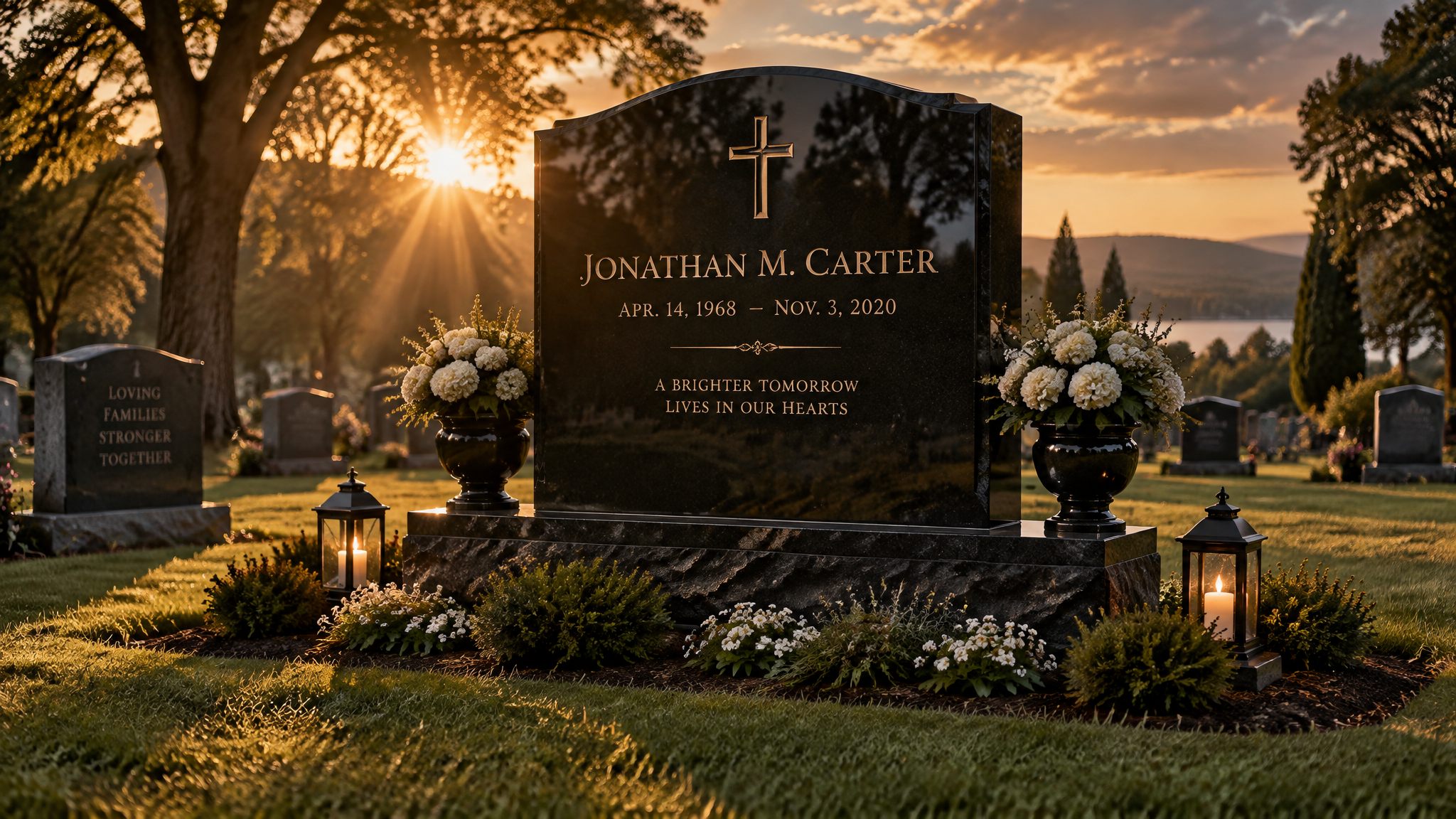
Selecting a headstone for a loved one is one of the most important decisions a family will make during the memorial process. The right headstone captures the essence of a person's life, provides a lasting place of remembrance, and complies with cemetery regulations. This guide draws on over sixty years of our family's monument-crafting experience to help you navigate every aspect of the decision.
Step 1: Check Cemetery Requirements First
Before browsing designs or choosing materials, contact your cemetery (or let our team do it for you at no extra cost). Every cemetery has specific regulations regarding:
- Permitted headstone types: Some cemeteries only allow flat markers; others permit upright monuments. Lawn-level sections typically require flush-set markers.
- Size restrictions: Maximum height, width, and depth dimensions vary by section and lot size.
- Material requirements: Most cemeteries require natural granite or bronze. Some accept marble, but granite is recommended for durability.
- Foundation specifications: Many cemeteries require a concrete foundation poured by their own crew or an approved installer.
According to the FTC Funeral Rule (16 CFR Part 453), cemeteries cannot require you to purchase a headstone through them. You have the legal right to buy from any supplier.
Step 2: Choose the Right Granite
Granite is the preferred material for headstones because of its exceptional durability, weather resistance, and beauty. Key considerations:
- Black granite (India Black, Absolute Black): The most popular choice. Offers stunning contrast for laser-etched portraits and inscriptions. Timeless elegance.
- Gray granite (Barre Gray, Georgia Gray): Classic, understated look. Excellent for traditional lettering. The most common granite used in American cemeteries.
- Color granites (India Red, Dakota Mahogany, Blue Pearl): Make a distinctive statement. Red and pink granites are popular for women's memorials; blue granites create a unique, eye-catching presence.
The USGS (United States Geological Survey) classifies granite as an ignite rock with a Mohs hardness of 6-7, making it one of the most durable natural materials available for outdoor monuments.
Step 3: Select Your Headstone Style
The major headstone categories include:
- Upright headstones: The traditional choice. Available in single or companion (double) sizes. Typical height range: 24" to 42".
- Flat/bevel markers: Lawn-level or slightly raised. Required in many modern cemetery sections. Lower cost option.
- Heart-shaped headstones: Romantic, emotional design. Popular for couples and young adults.
- Memorial benches: Functional and beautiful. Provides a place for visitors to sit and reflect.
- Children's memorials: Tender designs featuring teddy bears, angels, or other comforting imagery.
Step 4: Personalize the Design
Modern headstone customization options include standard inscriptions (names, dates, epitaphs), laser-etched portraits, religious symbols, custom artwork and scenes, vases and bronze accessories, and 3D sculptural elements. At Memory Headstones, every order includes a free 3D design preview with unlimited revisions, so you can see exactly how the finished memorial will look before production begins.
Step 5: Understand Pricing and Payment Options
Headstone prices vary based on size, granite type, and customization level. As a general guide: flat markers start around $1,000-$2,000, upright headstones range from $2,500-$8,000, companion monuments from $5,000-$15,000, and custom sculptures from $10,000 and up. We offer 0% financing for up to 36 months, veteran and first responder discounts, and a price-match guarantee where we beat competitor quotes by 10%.
Sources: FTC Funeral Rule (16 CFR Part 453), USGS Mineral Resources, California Cemetery and Funeral Bureau, NFDA Guidelines