A granite headstone is a timeless tribute to a loved one, standing as a permanent marker of their life and legacy. Among all the materials available for memorialization, granite is universally recognized as the premier choice due to its unparalleled durability, natural beauty, and inherent resistance to the harsh elements of nature. Formed over millions of years deep within the earth’s crust under immense heat and pressure, granite is an igneous rock composed primarily of quartz, feldspar, and mica. However, despite its incredibly robust nature, a granite memorial is not entirely maintenance-free. Over decades, constant exposure to sun, driving rain, freezing snow, wind-blown dust, and aggressive biological growth can gradually dull its highly polished finish and obscure the delicate engraved inscriptions.
This comprehensive guide is dedicated exclusively to the proper care, safe cleaning, and long-term maintenance of granite headstones. Because different natural stones require vastly different care regimens, it is crucial to understand that the methods described here are formulated specifically for granite’s unique geological composition. By following these meticulously detailed guidelines, you can safely preserve the stone’s integrity and ensure that the memorial remains as pristine, respectful, and dignified as the day it was first placed in the cemetery.
Essential Preparation and Tools
Before you even begin the journey to the cemetery, proper preparation is absolutely vital. Using the wrong tools or harsh chemical agents can cause irreversible damage to the granite’s surface, accelerating deterioration rather than preventing it. You must assemble a specialized cleaning kit containing only safe, non-abrasive materials.
Your Granite Cleaning Kit Should Include:
- Abundant Clean Water: Bring several large gallons of distilled or clean tap water. You will need significantly more water for rinsing than you might initially expect.
- Soft-Bristled Brushes: Natural fiber brushes or very soft synthetic brushes. Bring various sizes, including small soft toothbrushes for gently cleaning inside the engraved letters.
- Non-Ionic Soap: A specially formulated non-ionic detergent (like Orvus WA Paste). Regular household soaps contain salts that can penetrate the microscopic pores of the granite and cause “spalling” (flaking) over time.
- Clean Sponges: Natural sea sponges or clean, dye-free synthetic sponges for applying the water and soap mixture.
- Microfiber Cloths: Soft, lint-free towels for the final drying and buffing stage.
- Wooden or Plastic Scrapers: Small craft sticks or plastic spatulas for carefully removing stubborn biological growth like thick lichen or dried tree sap without scratching the stone.
- Spray Bottles: To apply the cleaning solution evenly and gently across the vertical surfaces of the monument.
The Step-by-Step Granite Cleaning Process
Cleaning a granite headstone requires patience, a gentle touch, and a systematic approach. Never rush the process, and always start with the gentlest cleaning method possible, which is usually just pure water.
- Thorough Initial Inspection: Before applying any liquids, carefully examine the entire granite monument. Look for any existing cracks, severe flaking, or unstable areas. If the stone appears structurally compromised, do not proceed with cleaning, as water pressure could worsen the damage.
- Dry Brushing and Debris Removal: Use a dry, soft-bristled brush to gently sweep away loose dirt, dust, fallen leaves, spider webs, and loose biological matter from the surface and base of the headstone.
- Pre-Wetting the Stone: Granite is highly porous. Before applying any cleaning solution, thoroughly saturate the entire stone with clean water from the bottom up. Wetting from the bottom up prevents the cleaning solution from leaving permanent drip marks or streaks as it runs down dry stone.
- Applying the Cleaning Solution: Mix a very small amount of your non-ionic soap with water in a bucket or spray bottle (usually just one ounce of soap per gallon of water). Apply the solution generously to the wet granite.
- Gentle Scrubbing: Using your soft-bristled brushes, scrub the stone gently in small, overlapping circular motions. Start at the bottom and slowly work your way to the top of the monument. Use the soft toothbrush to carefully dislodge dirt trapped within the engraved names and dates.
- Continuous and Frequent Rinsing: This is the most critical step. Constantly rinse the stone with clean water as you work. Never allow the soapy solution to dry on the granite surface, as it will leave a cloudy residue that is difficult to remove.
- Final Thorough Rinse: Once the entire monument has been cleaned, perform a final, heavy rinse from the top down to ensure absolutely all dirt and soap residue has been washed away into the surrounding soil.
- Drying and Buffing: Use clean, dry microfiber cloths to gently pat the stone dry. For polished granite, light buffing with a dry microfiber cloth will help restore its brilliant, mirror-like shine and prevent water spots from forming.
Guide to Caring for a Granite Memorial
What to Use vs. What to Avoid (Granite Care)
To prevent catastrophic damage to the memorial, you must strictly adhere to the rules of what is safe and what is dangerous for granite surfaces.
| Care Category | Safe and Recommended for Granite | Dangerous (DO NOT USE) | Reason for Danger |
| Cleaning Liquids | Distilled water, Non-ionic detergents, D/2 Biological Solution | Household bleach, Ammonia, Vinegar, Window cleaners | Acidic and caustic chemicals eat away the polish, alter the stone’s color, and break down the minerals. |
| Scrubbing Tools | Soft natural fiber brushes, Soft toothbrushes, Microfiber cloths | Wire brushes, Steel wool, Abrasive scouring pads, Metal scrapers | Metal tools will immediately inflict deep, permanent scratches into the granite’s polished surface. |
| Water Pressure | Gentle pouring from jugs, Low-pressure hand-pump sprayers | High-pressure power washers | Extreme water pressure can blast away the polish, widen microscopic fissures, and damage lettering. |
| Finishing | Clean, dry microfiber buffing towels | Waxes, Polishes, Silicone sealants, Oils | Granite needs to “breathe.” Sealants trap moisture inside the stone, leading to internal expansion and cracking. |
Managing Environmental and Biological Stains
Granite placed outdoors is constantly battling nature. Different environmental factors create specific types of stains that require targeted, yet gentle, approaches.
| Type of Stain | Identification | Safe Removal Method for Granite |
| Lichen & Algae | Green, black, or crusty gray/yellow circular patches growing on the stone. | Pre-wet stone. Use a wooden scraper to gently lift thick crusts. Apply D/2 Biological Solution, let it sit, scrub gently, and rinse. |
| Hard Water Stains | White, chalky mineral deposits, usually from cemetery sprinkler systems. | Extremely difficult to remove without professional help. Regular wiping with distilled water prevents buildup. Never use acidic “lime-away” products. |
| Bird Droppings | White or dark acidic splatters that can etch the polish if left too long. | Rehydrate the droppings with a wet sponge until soft, then gently wipe away. Wash the area thoroughly with non-ionic soap and rinse. |
| Tree Sap | Sticky, amber-colored droplets that harden like resin over time. | Do not scrape while hard. Soften the sap with warm water or a specialized, stone-safe biological solvent, then gently wipe. |
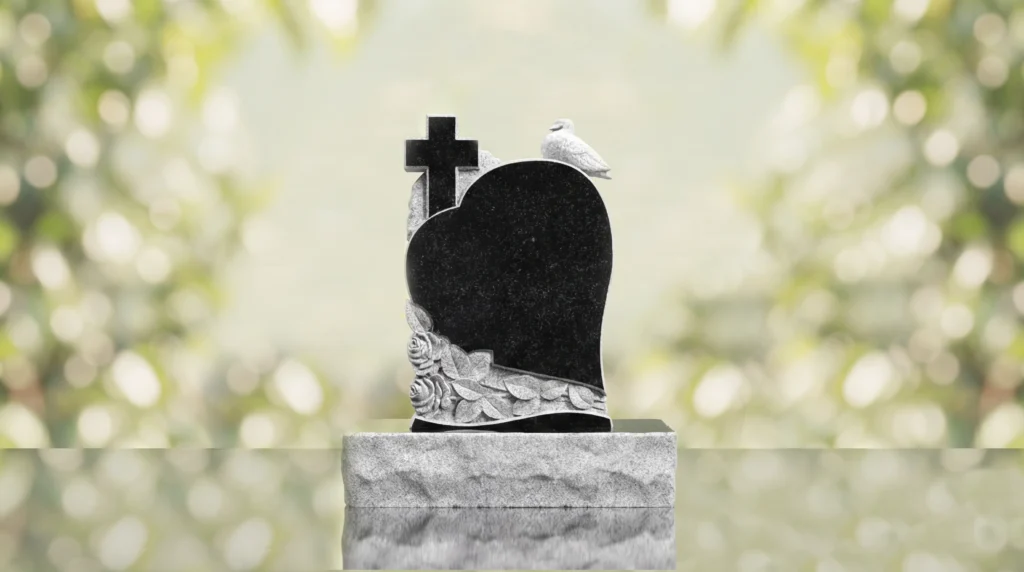
Guide to Caring for a Headstone
Frequently Asked Questions (FAQ)
How often should I clean a granite headstone?
Less is usually more when it comes to monument cleaning. A thorough cleaning once a year, or even once every two years, is perfectly sufficient for granite. Over-cleaning, even with the safest methods, can prematurely wear down the stone’s natural polish over decades.
Can I use regular dish soap if I dilute it heavily?
No. Regular household dish soaps, laundry detergents, and all-purpose cleaners contain aggressive degreasers, salts, and sometimes acidic components. These salts remain in the pores of the granite, crystalize during temperature changes, and cause the surface to flake off. Always invest in non-ionic soap.
The engraved letters on the granite are hard to read. Can I repaint them?
While it is possible to re-ink or re-paint lettering, this should generally be left to professional memorial masons. They use specialized lithichrome paints formulated specifically to bond with granite and withstand outdoor weathering. Standard paints will quickly peel and look unsightly.
Is it safe to clean a granite headstone during the winter or freezing temperatures?
Absolutely not. You should only clean granite when the temperature is steadily above 50°F (10°C) and is expected to remain above freezing for the next 24 to 48 hours. If water enters the microscopic pores of the stone and then freezes, it will expand and can cause severe cracking or splitting.
Should I apply a weatherproof sealant after cleaning to protect the granite?
No. Granite is a natural material that needs to remain breathable. Applying commercial waxes, silicone sealants, or automotive polishes traps natural moisture inside the stone. This trapped moisture will eventually cause discoloration, aggressive internal deterioration, and potential cracking during freeze-thaw cycles.