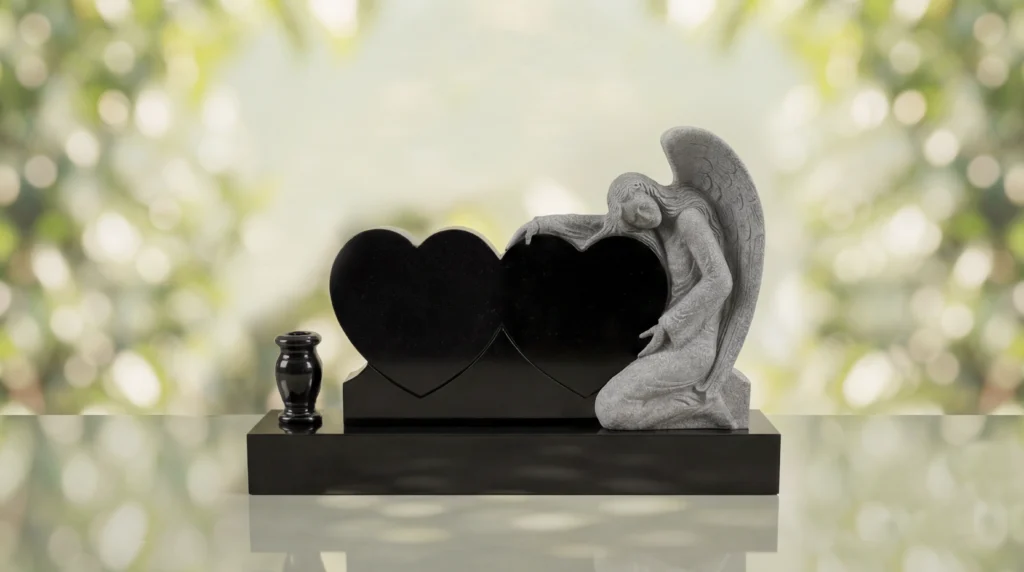
Choosing a memorial for a loved one is one of the most emotional and enduring decisions a family will ever make. When the time comes to commemorate a lifelong partnership, a shared journey, or an unbreakable familial bond, many families turn to companion headstones. Also known as double headstones or joint monuments, these memorials are specifically designed to mark the final resting place of two people—most commonly spouses, but also siblings, life partners, or parents and children.
A companion headstone is much more than a marker of stone or bronze; it is a lasting testament to a shared life. In this comprehensive guide, we will explore the deep emotional meaning behind companion headstones, their practical purposes, the myriad of design options available, and how to choose the perfect tribute for an eternal bond.
The Profound Meaning Behind Companion Monuments
The primary appeal of a companion headstone lies in its profound symbolism. Throughout human history, the act of being laid to rest beside a partner has been the ultimate expression of devotion.
- Eternal Togetherness: A companion monument visually represents the idea that love transcends death. For couples who have spent decades building a life together, sharing a single memorial symbolizes that their bond remains unbroken even after they have passed. It is the physical embodiment of the vow, “till death do us part.”
- A Shared Legacy: A joint headstone tells a unified story. Instead of presenting two separate individuals, the monument presents a partnership. The shared surname proudly displayed across the top of the stone serves as an umbrella under which both individuals’ unique lives—and their shared journey—are celebrated.
- Comfort for the Living: For surviving family members and future generations, visiting a single, unified gravesite can offer immense emotional comfort. Seeing the names of grandparents or parents etched into the same stone provides a sense of peace, reinforcing the idea that they have been reunited.
The Practical Purposes of a Double Headstone
While the emotional significance is often the driving factor, companion headstones also serve several highly practical purposes for families and estate planners.
- Financial Efficiency: Purchasing a single, larger headstone is almost always more cost-effective than purchasing, engraving, and installing two separate single headstones. Families save on the cost of the stone itself, base materials, and cemetery installation fees.
- Space Conservation: Cemetery space is becoming increasingly premium. A companion headstone allows two individuals to be memorialized on a single cemetery plot or a side-by-side double plot with one centralized marker, maximizing the use of available space.
- Simplified Maintenance: Maintaining a gravesite over decades can be challenging. A single double-headstone is easier to clean, polish, and maintain than multiple stones. Landscaping around one stone is also significantly easier for the cemetery groundskeepers.
- Pre-Planning Convenience: Companion headstones are often purchased “pre-need” (before death). When the first partner passes, the stone is placed with both names and dates of birth. The surviving partner has peace of mind knowing their final arrangements are already settled, and their side of the stone simply awaits a final death date to be inscribed on-site later.
Exploring Popular Design Options and Styles
The aesthetics of a companion headstone can be tailored to reflect the unique personalities of the individuals it commemorates. Because companion stones are naturally wider than single stones, they offer a broad canvas for artistic expression.
1. Upright Monuments
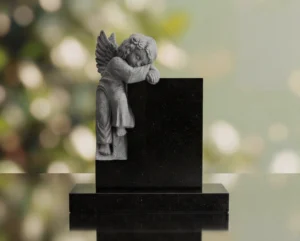
The most traditional and popular choice, upright companion monuments consist of a large, vertical stone (the tablet or die) set upon a sturdy base. The wide, horizontal orientation of a companion upright monument provides ample space for a large shared family name at the top, with the individual names, dates, and personal epitaphs inscribed side-by-side below.
2. Flat Markers (Flush Markers)
Flat markers sit entirely flush with the ground. Many modern or “memorial park” style cemeteries strictly require flat markers to maintain an unobstructed, park-like landscape. Companion flat markers are cast horizontally, typically measuring 36 to 48 inches wide, providing enough room for two sets of information.
3. Slant Markers
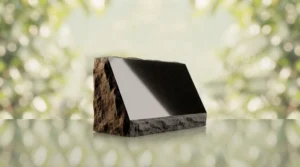
Slant markers have a steep, angled face that slopes backward, usually sitting directly on the foundation or on a granite base. They offer the visibility of an upright monument but are generally shorter and more compact. The slanted face makes the inscriptions easy to read for visitors standing at the foot of the grave.
4. Bevel Markers (Pillow Markers)
Bevel markers are similar to flat markers but are raised slightly above the ground, usually standing about 6 to 8 inches high at the back and sloping gently toward the front. This slight angle helps keep debris and water off the face of the stone while providing a slightly better viewing angle than a flush marker.
5. Ledger Markers
A ledger is a large slab of stone that covers the entire length and width of the grave. For companion plots, a double-width ledger can be crafted, or a single ledger can bridge two plots. These offer maximum space for elaborate engravings, lengthy epitaphs, and intricate artwork.
Selecting the Right Material
The longevity, appearance, and maintenance requirements of a headstone depend entirely on the material chosen.
- Granite: Granite is the undisputed gold standard for cemetery monuments. It is incredibly durable, resistant to severe weather, and available in a stunning array of colors—ranging from classic grays and stark blacks to deep reds, emerald greens, and vibrant blues. High-quality granite will hold detailed laser etchings and deep engravings for centuries without fading.
- Bronze: Bronze is an elegant, timeless metal that naturally develops a beautiful green-brown patina over time (though clear coatings can preserve its original sheen). Bronze companion markers are typically cast as flat plaques and mounted onto a granite base. They allow for highly detailed 3D reliefs and are often required in specific flat-marker cemeteries.
- Marble: While undeniably beautiful and classic, marble is much softer and more porous than granite. Over decades, acid rain and environmental factors can cause the intricate details and lettering on a marble headstone to blur and wear away. It is generally recommended only in dry climates or for indoor mausoleum use.
Comparison: Companion Headstones vs. Two Single Headstones
To help families make an informed decision, here is a breakdown comparing a double monument to two separate, single monuments.
| Feature | Companion (Double) Headstone | Two Single Headstones |
| Symbolism | Represents unity, a shared life, and an unbreakable bond. | Represents individual identities and independent journeys. |
| Overall Cost | Generally more cost-effective (one stone, one installation fee). | More expensive (paying for two stones and two separate installations). |
| Space Required | Can be used on a single shared plot (if burying urns/deep burial) or a double plot. | Requires two separate, side-by-side burial plots. |
| Design Canvas | Offers a wide, continuous space for a shared family name and large artwork. | Smaller design spaces; designs must be duplicated or coordinated. |
| Maintenance | Easier to clean and landscape around a single monument. | Requires double the maintenance and groundskeeping. |
| Pre-planning | Surviving partner’s details are pre-carved; only the death date is added later. | The surviving partner must eventually design and purchase a second stone. |
Personalization and Customization Options
A companion headstone is a blank slate waiting to be filled with the story of a lifetime. Because of the expanded surface area, families have numerous ways to personalize a double monument.
- Meaningful Epitaphs: Families can choose a single, unifying quote that spans the bottom of the stone (e.g., “Together Forever,” “In life we loved dearly, in death we are not parted”), or they can engrave two separate, shorter epitaphs under each individual’s name.
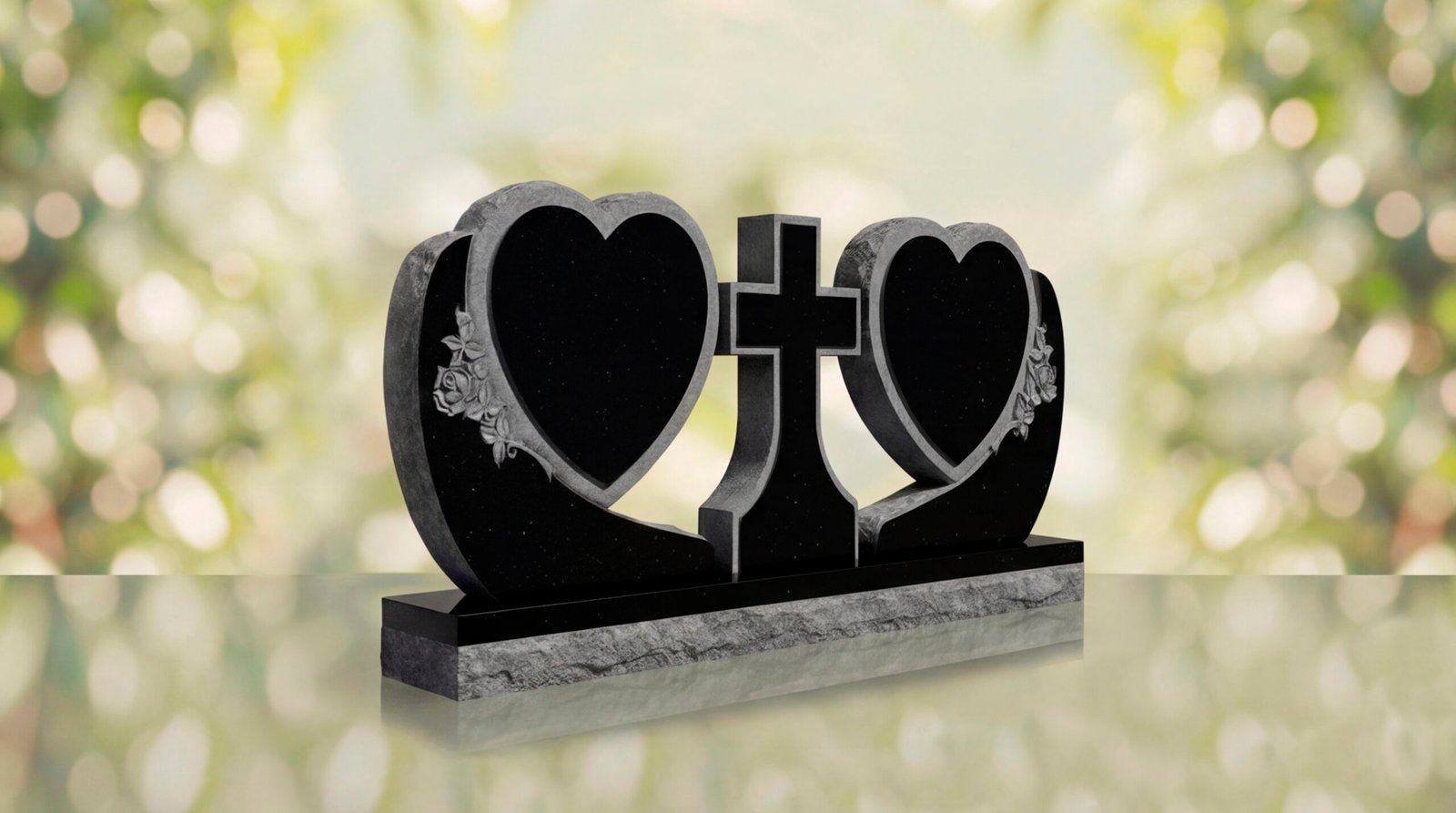
- Laser Etching and Artwork: Black granite is particularly well-suited for laser etching. Families often commission etchings of a wedding photo, a landscape of a favorite vacation spot, intertwined wedding rings, or religious symbols like praying hands or crosses that bridge the center of the stone.
- Ceramic Portraits: A popular European tradition that has gained widespread popularity is the addition of a fired ceramic photo. A photo of the couple in their happiest times is baked into a porcelain oval and permanently affixed to the stone, allowing future generations to see the faces behind the names.
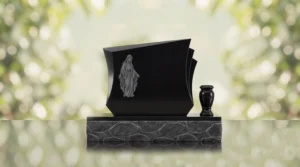
- Built-in Vases: Companion headstones, particularly upright ones, often feature integrated flower vases on either side of the monument or a single shared vase in the center. This makes leaving floral tributes easy and keeps the gravesite tidy.
Navigating Cemetery Rules and Regulations
Before purchasing any monument, it is absolutely vital to consult the cemetery’s rules and regulations. Cemeteries govern everything that goes onto their grounds to maintain a specific aesthetic and ensure safe groundskeeping.
Some cemeteries restrict the size of companion headstones, dictating maximum heights and widths. Others strictly regulate the style—for instance, prohibiting upright monuments entirely in favor of flat bronze markers. There may also be rules regarding the materials used, the color of the granite, and even the type of edging on the stone. Working closely with both the cemetery director and a reputable monument builder will ensure your chosen design complies with all local guidelines.
The Logistics of Pre-Need Purchasing and Engraving
Many companion headstones are purchased as part of a “pre-need” funeral plan. A couple will select, design, and pay for the headstone while both are still living, or when the first partner passes away.
When the monument is installed, the surviving partner’s name and birth year are often engraved alongside the deceased. When the surviving partner eventually passes, there is no need to remove the heavy stone from the cemetery. Monument companies use mobile, on-site engraving equipment (usually sandblasting tools) to add the final date of death directly at the gravesite. This process is seamless, perfectly matches the original font, and saves the family from the logistical nightmare of transporting a granite block that weighs thousands of pounds.
Conclusion: A Lasting Tribute
A companion headstone is a beautiful, enduring declaration that a love story does not end with passing. It provides an efficient, practical, and highly customizable way to honor two lives that were intricately woven together. Whether you choose a towering, majestic upright granite monument or a subtle, elegant flat bronze marker, a double headstone creates a permanent, centralized place of peace. It stands as a silent guardian over a shared legacy, offering comfort to surviving families and ensuring that a lifetime of togetherness is remembered for generations to come.