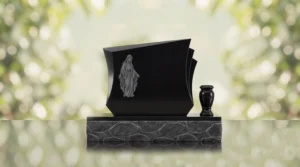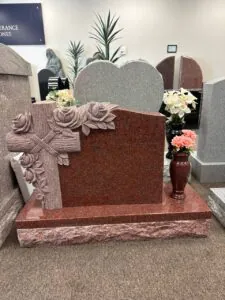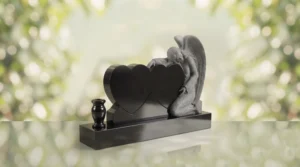
When a loved one passes, the monument that marks their final resting place becomes an enduring symbol of their life, legacy, and the impact they left on the world. For centuries, the creation of these monuments relied solely on the physical strength and steady hands of stonemasons armed with hammers and chisels. Today, however, the memorialization industry has been revolutionized by high-level engraving techniques that blend traditional artistry with cutting-edge technology.
From the profound depth of classic sandblasting to the hyper-realistic precision of modern laser etching, headstone engraving offers unprecedented ways to customize and personalize a memorial. Understanding these high-level techniques is crucial for families, memorial designers, and artisans, as each method possesses its own unique strengths, material limitations, and aesthetic qualities.
1. The Industry Standard: Advanced Sandblasting
Sandblasting remains the most common and versatile method for engraving headstones. While the core concept—propelling abrasive material at high speeds to erode stone—is simple, modern high-level sandblasting is an intricate process that yields stunning three-dimensional results.
The process begins with a computerized design. The design is printed and cut onto a thick, rubber-like stencil (often called “sandblast tape” or mask). This stencil is applied to the polished stone. The areas of the design meant to be engraved are peeled away, exposing the bare granite. In a sealed blasting room, the artisan uses a high-pressure hose to shoot aluminum oxide or steel grit at the stone. The exposed areas are carved away, while the rubber stencil protects the polished surface.
High-level sandblasting is categorized into different styles based on the artisan’s technique:
- Flat Carving: The most basic form, where the design is blasted to a uniform depth. It is highly legible and excellent for standard lettering.
- V-Sinc (V-Cut) Lettering: The sandblasting nozzle is angled to carve a deep “V” shape into the stone. This creates beautiful shadows and makes the lettering highly visible and elegant.
- Shape Carving: This elevates sandblasting to a true art form. Instead of a flat depth, the artisan manipulates the air pressure and nozzle angle to create varying depths and contours within the design (like the overlapping petals of a rose or the veins of a leaf), resulting in a sculpted, 3D appearance.
2. The Artisanal Touch: Hand Etching
Hand etching is a premium, time-intensive technique that relies entirely on the skill, eye, and steady hand of a master artist. Because it does not rely on automated machinery, every single hand-etched monument is a unique, one-of-a-kind original.
Using a diamond-tipped engraving tool or a rotary Dremel, the artist meticulously scratches away the polished surface of the stone to reveal the lighter, unpolished granite beneath. By varying the pressure and the density of the scratches, the artist creates a highly nuanced gradient of lights and darks.
This technique is most often used for creating detailed portraits, scenic landscapes (like a family farm or a beloved fishing spot), or intricate religious icons. Hand etching is exceptionally expressive; a skilled artist can capture the specific sparkle in a person’s eye or the subtle texture of a beloved pet’s fur in a way that machines often struggle to replicate organically. However, because it relies on the contrast between the polished surface and the scratched interior, it must exclusively be performed on high-quality, pure black granite (such as Premium Black or absolute black granite).
3. Photorealistic Precision: Laser Etching
Laser etching represents the pinnacle of digital reproduction in the monument industry. This technique utilizes large, highly calibrated CNC (Computer Numerical Control) laser machines to burn designs directly into the stone.
The process begins with a high-resolution digital image—often a scanned photograph of the deceased. Specialized software converts this image into a grayscale bitmap format, calculating exactly where the laser needs to strike the stone. The headstone is loaded onto the flatbed of the machine, and a high-powered laser beam rapidly pulses across the surface. Each microscopic pulse shatters the polish, creating a tiny white dot. By tightly packing these dots together, the machine creates a flawless, photorealistic reproduction of the original image.
Key advantages of laser etching include:
- Unmatched Accuracy: It can replicate the exact likeness of a photograph with zero human error or artistic reinterpretation.
- Complex Collages: Multiple images, text, and backgrounds can be seamlessly blended in digital software before being etched onto the stone.
- Fine Detail: It can render details as small as the threads on a piece of clothing or complex architectural backgrounds.
Like hand etching, laser etching is strictly limited to dark, dense stones. On lighter granites (like gray or pink), the lack of contrast makes the laser-etched image virtually invisible.
4. Architectural Depth: CNC Routing and Milling
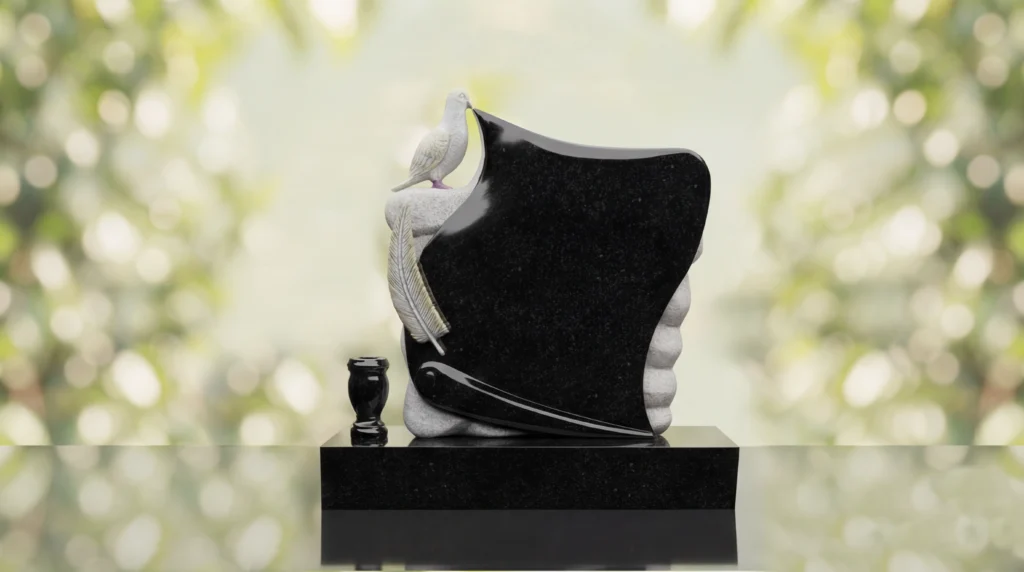
For families who want significant physical depth, architectural elements, or full 3D bas-relief sculptures integrated into the headstone, CNC routing and milling provide extraordinary results.
This technique uses computer-controlled robotic arms or gantry systems equipped with spinning, diamond-encrusted drill bits. A 3D model is created using CAD (Computer-Aided Design) software. The CNC machine then carves away large volumes of stone layer by layer, following the digital model with microscopic precision.
While sandblasting is excellent for carving into a flat surface, CNC milling is capable of carving around a subject, leaving a raised, three-dimensional sculpture emerging from the stone. It is frequently used to create high-relief religious figures, detailed architectural columns, and ornate, deep-cut borders that would take a traditional stonemason weeks or months to complete by hand.
Technique Comparison Overview
To better understand how these high-level techniques stack up against one another, review the comparative matrix below.
| Engraving Technique | Best Used For | Detail Capability | Ideal Material | Relative Cost | Durability/Longevity |
| Sandblasting | Deep lettering, traditional symbols, shape-carved flowers. | Moderate to High (Bold designs) | Any color granite, marble, limestone. | Moderate | Extremely High (Deep cuts withstand centuries of weathering). |
| Hand Etching | Custom portraits, scenic views, capturing emotion. | Very High (Artistic interpretation) | Pure Black Granite only. | High (Requires master artist labor). | High (Will last as long as the stone’s polish remains). |
| Laser Etching | Photorealistic images, complex collages, fine text. | Absolute Highest (Photographic) | Pure Black Granite only. | Moderate to High | Moderate to High (Shallow depth can fade if polish degrades). |
| CNC Milling | 3D bas-reliefs, architectural elements, deep sculpting. | High (Structural/3D detail) | Dense granites (any color), marble. | Very High (Machine time + tool wear). | Extremely High (Elements are deeply carved into the structure). |
Crucial Considerations When Choosing a Technique
Selecting the right engraving technique requires balancing aesthetics with practical and environmental realities. When planning a high-level headstone design, families and designers must consider the following factors:
- Granite Color and Density: This is the most restrictive factor. If you desire a light gray, blue, or rose-colored granite, you must use sandblasting or CNC milling. Laser and hand etching simply will not show up on lighter stones due to a lack of visual contrast.
- Cemetery Regulations: Many cemeteries have strict bylaws regarding monument aesthetics to maintain a unified look across the grounds. Some historical or religious cemeteries explicitly prohibit laser-etched portraits, while others mandate specific sandblasted fonts or depths. Always consult the cemetery deed before finalizing a design.
- Long-Term Maintenance and Weathering: Depth equals longevity in stone carving. A deeply sandblasted V-cut letter will remain legible for hundreds of years, even as wind and rain erode the stone’s surface. Laser etching, because it only scratches the microscopic top layer of the polish, is more susceptible to fading if the stone is placed in an area with highly acidic rain, heavy tree sap, or extreme direct sunlight that degrades the polish over decades.
- Budgetary Constraints: Automated processes like sandblasting and laser etching are generally more accessible in terms of pricing. Techniques that require heavy machine time and tool replacement (CNC milling) or dozens of hours of manual labor by a master artisan (hand etching) will significantly increase the cost of the memorial.
Conclusion
The advancement of high-level engraving techniques has transformed the way we commemorate lives. We are no longer limited to basic names and dates carved into a generic slab of rock. Whether choosing the deep, enduring shadows of shape-carved sandblasting, the striking emotional resonance of a hand-etched portrait, the flawless digital accuracy of a laser beam, or the architectural grandeur of CNC milling, modern memorialization allows for absolute personalization.
Ultimately, the best technique is the one that respectfully and accurately captures the essence of the individual, providing a permanent, beautiful place of reflection for generations to come.